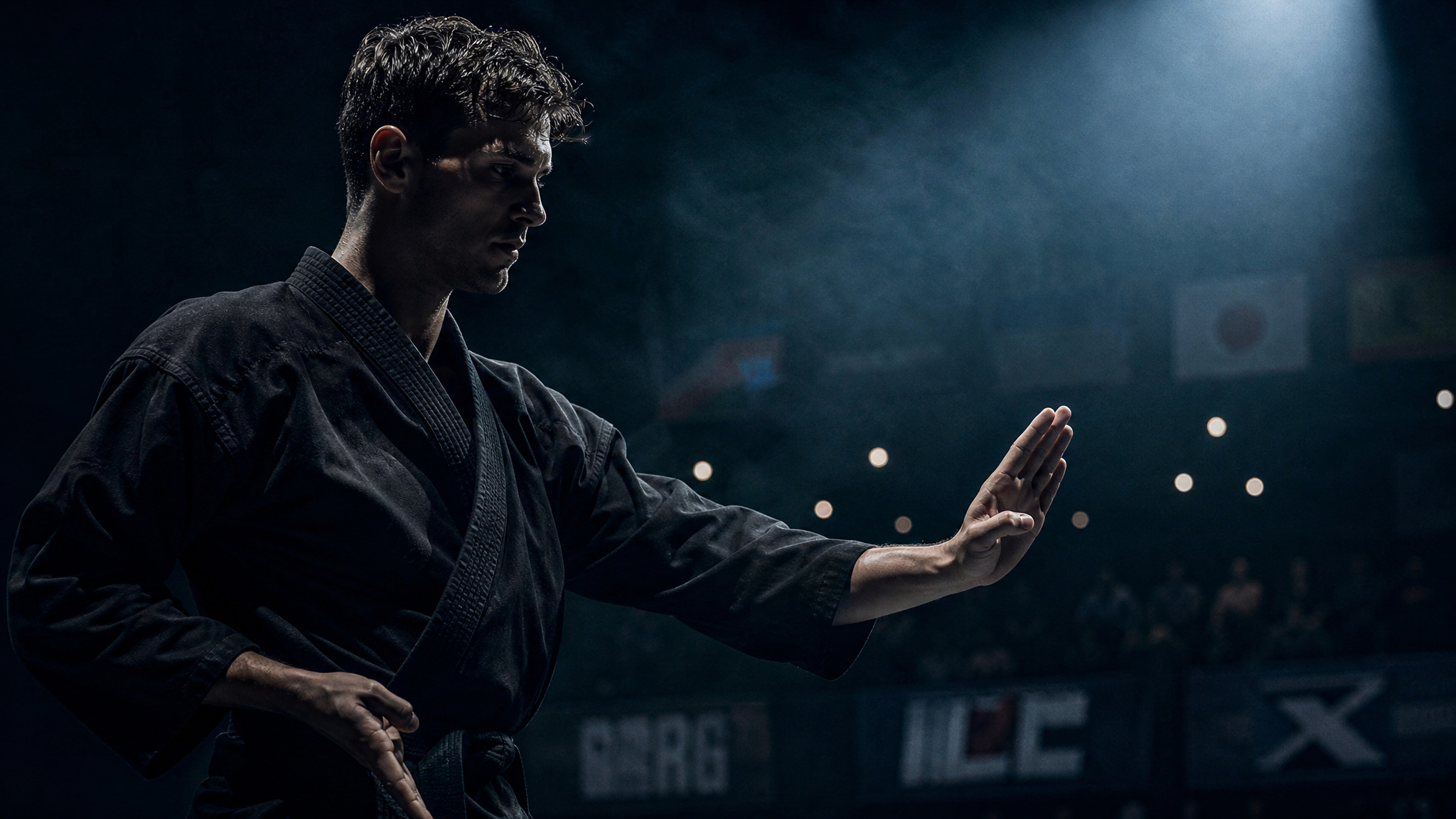
One scenario.
Every style.
Show your solution.
Scenario Martial Arts is a virtual-first competition where practitioners of any discipline face the same self-defense scenario. Competitors don’t fight each other — their solutions compete.
The Concept
Competitors don’t fight each other.
Their solutions compete.
Traditional competition asks who can win a fight. Scenario Martial Arts asks a different question: given the same situation, whose response is most effective, credible, and controlled?
Every entrant answers the same published scenario. Every answer is measured against the same criteria. The style is up to you — the standard is shared by everyone.
The Scenario
One defined situation, shared by all competitors.
The Solution
Your art’s response, performed under set conditions.
The Standard
One scorecard that judges the solution, not the style.
How It Works
From scenario to solution, in five steps
A scenario is published
Every competitor receives the same defined self-defense scenario — setting, objective, starting conditions, and constraints.
You build your solution
Using your own martial art, you develop a response to the scenario with a training partner under the stated conditions.
You record your entry
A rehearsed video submission captures your solution clearly enough to be evaluated. No live event, no travel.
Judges score the solution
Each entry is assessed independently against one shared 100-point scorecard — the same criteria for every style.
Solutions are compared
Results reveal how different disciplines solve the same problem — and which solutions meet the standard best.
Why It’s Different
A different question deserves a different format
Open-Style
Every discipline enters the same scenario. No style is favoured — only the quality of the solution.
Scenario-Based
Realistic, defined situations replace abstract point-scoring. Context drives everything.
Evidence-Informed
Scenarios and criteria draw on documented principles and coaching practice, refined openly.
Virtual-First
Rehearsed video submissions let practitioners take part from anywhere in the world.
Explainer Film · In Production
See the founding scenario come to life
A short film walking through SMA-001: The Blocked Exit — the situation, the objective, and how different styles approach the same problem. Coming soon.
The Approach
Evidence-informed by design
Scenarios and criteria are built on documented principles and established coaching practice — then tested and refined in the open. The result is a format that is grounded, transparent, and built to improve.
Research
Documented principles and coaching practice
Scenario Design
A realistic situation with a clear objective
Defined Conditions
Fixed constraints every competitor shares
Competitor Solution
Each style’s response to the same problem
Common Evaluation
One scorecard applied to every entry
Tier 1
Established principles
Widely documented self-defense fundamentals — prioritising escape, managing distance and position, and de-escalation before force.
Tier 2
Coaching practice
Recognised training and instructional practice from across disciplines, used to shape realistic conditions and constraints.
Tier 3
Open review
Feedback from founding participants and practitioners, gathered openly to refine scenarios and criteria over time.
A note on language. We say “evidence-informed,” not “evidence-based,” on purpose. As a founding pilot, our aim is to build on what is documented and known, while being honest that the format itself is still being tested. Criteria and scenarios will be reviewed and refined as real entries and practitioner feedback come in.
Founding Scenario
Founding ScenarioSMA-001 — The Blocked Exit
A single aggressor blocks the only exit from an enclosed space. The objective is to create the opportunity to leave safely — through positioning, timing, and controlled technique — not to win a fight.
Objective
Create the opportunity to reach the exit and leave safely. The priority is disengagement and escape — not dominating or defeating the aggressor.
Setting
A small, enclosed room — such as a back office, storeroom, or narrow corridor — with a single usable exit. Space to move is limited, and the environment constrains large, committed techniques.
Situation
A single aggressor stands between the defender and the only way out. The aggressor is agitated and blocking the path. The situation has not yet become physical, but the defender cannot leave without addressing the obstacle.
Starting Conditions
- Defender begins standing, at conversational distance, hands empty and visible
- Aggressor is positioned between the defender and the exit
- No weapons are present at the start of the scenario
- The defender is alone — no third parties to protect
Constraints
- No pre-emptive strike without a demonstrated trigger or escalation
- Techniques must be performed with visible control and partner safety
- The objective is to leave — pursuing or finishing the aggressor is scored down
- The environment (walls, furniture, single exit) must be respected in the solution
One Scenario, Many Solutions
The same problem, solved six ways
How might different disciplines approach SMA-001: The Blocked Exit? These are illustrative directions — not prescribed answers. The best solution is the one that meets the criteria.
Karate
Explosive distance control and a decisive strike to create the gap needed to reach the exit.
Wing Chun
Close-range trapping and simultaneous defence and attack to clear the line to the door.
Brazilian Jiu-Jitsu
Managing grips and clinch to off-balance the aggressor and slip past toward the exit.
Filipino Martial Arts
Sensitivity, angles, and limb control to redirect the aggressor and open the escape path.
Krav Maga
Aggressive, direct disruption and immediate movement toward safety and the exit.
Judo
Off-balancing and a controlled throw or displacement to clear the path and disengage.
Illustrative only. Style names are used to describe general approaches and do not imply endorsement by, or affiliation with, any organisation or governing body.
Judging
Judge the solution. Not the style.
Different technical solutions. Shared evaluation criteria. Every entry is scored against the same 100-point scorecard — regardless of discipline.
Realism / Scenario Credibility
Credible distance, timing, reactions, behavior, and environmental conditions.
Effectiveness
The solution achieves the stated objective of the scenario.
Technical Execution
Balance, structure, timing, precision, mechanics, and control.
Decision-Making
Sound choices based on threat, surroundings, protected people, and disengagement opportunities.
Control and Safety
Techniques performed responsibly with appropriate control.
Presentation
The performance is shown clearly enough for full evaluation.
Who’s Behind the Format
Built by martial artists.
Designed to stand up to scrutiny.
Scenario Martial Arts was created by two lifelong martial artists with complementary experience in instruction, competition, school leadership, self-protection, and evaluation-system design.

Adam DiStefano
Co-Founder and Competition Framework Director
Adam has practiced martial arts since 1989. A 6th Degree Black Belt in Tang Soo Do, former martial arts school owner, and longtime instructor, he has experience across traditional striking, close-range systems, internal arts, and weapons-based disciplines.
In his professional career, Adam designs governance, risk, control, and evaluation frameworks for complex emerging technologies. He created the Scenario Martial Arts competition framework to give practitioners from different disciplines a transparent and structured way to solve and compare the same practical problem.
Credential Highlights
- Martial arts practitioner since 1989
- 6th Degree Black Belt in Tang Soo Do
- Former martial arts school owner and instructor
- Competition and evaluation-framework designer
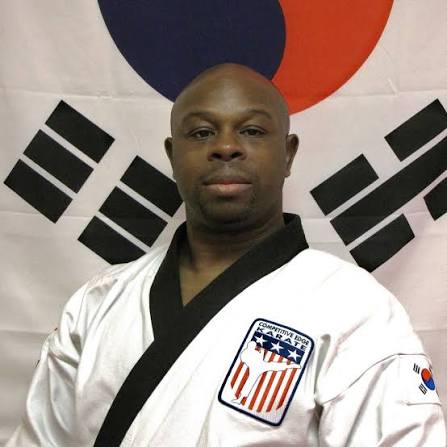
Kyoshi Roger Dabney
Co-Founder and Martial Arts Director
Kyoshi Roger Dabney brings 48 years of martial arts experience as a professional fighter, championship coach, published author, and school owner. A former top-10 world-ranked professional kickboxer and USA World Kickboxing Team member, he earned titles at the state, regional, national, and world levels.
Since founding Competitive Edge Karate in Henrico, Virginia, in 1997, he has awarded more than 650 black belts and coached competitors to 23 state, regional, national, and world amateur kickboxing titles.
Credential Highlights
- 48 years of active martial arts training
- Former top-10 world-ranked professional kickboxer
- Founder of Competitive Edge Karate
- More than 650 black belts awarded
- Coach of 23 championship titleholders
An Open-Style Standard
The founders establish the competition framework, scenario requirements, and safety standard. Individual entries will be evaluated by a multidisciplinary judging panel using shared, published criteria. No single martial art controls the standard.
The Founding Pilot
Get in at the start
Scenario Martial Arts begins as a founding pilot: a first cohort of practitioners who help prove and refine the format before a wider launch. This is where the standard is set.
Test the format
The pilot puts the scenario format, judging framework, and submission process in front of real practitioners for the first time.
Shape the standard
Founding participants help refine the criteria and scenarios — their entries and feedback directly influence how the competition develops.
Set the precedent
The first solutions to SMA-001 become the reference point for everything that follows. Founding entrants set the bar.
Register Interest
Join the Founding Pilot
Be among the first practitioners to shape the format. Register your interest and we’ll follow up with the founding scenario, submission guidelines, and timelines.
- Early access to the founding scenario
- A voice in how the format develops
- No cost to register your interest
Questions
Frequently asked
Scenario Martial Arts is a virtual-first competition concept where practitioners from any style respond to the same defined self-defense scenario. Competitors never face each other. Instead, their solutions are compared against shared, published criteria — so the question is not who wins a fight, but who presents the most effective, credible solution to the situation.
No. There is no sparring between entrants and no physical contact between competitors. Each entrant submits a rehearsed video response to a published scenario, performed with a training partner under defined conditions. Judges evaluate each solution independently against the same scorecard.
It means our scenarios and evaluation criteria are shaped by publicly available research, documented self-defense principles, and established coaching practice — rather than by claims we cannot support. We deliberately say “evidence-informed” rather than “evidence-based,” because this is a founding pilot: the framework is designed to be tested, reviewed, and refined openly over time.
Any style is welcome. The format is open by design — striking, grappling, weapons-based, and hybrid systems can all enter the same scenario. Every art brings a different solution, and every solution is measured against the same criteria.
Every entry is scored against one shared 100-point scorecard covering realism, effectiveness, technical execution, decision-making, control and safety, and presentation. The criteria judge the solution, not the style — so a well-reasoned response from any discipline can score highly.
The Founding Pilot is the first cohort of the competition. It exists to test the scenario format, the judging framework, and the submission process with real practitioners, and to refine everything before a wider launch. Founding participants help shape how the format develops.
Register your interest below with your name, email, country, and primary martial art. We will follow up with details on the founding scenario, submission guidelines, and timelines as the pilot opens.